New INTERDEM member – Hasan Armagan Uysal
About Me
I am a neurologist, researcher, and theatre practitioner based in Izmir, Türkiye, with a particular interest in dementia and neurodegenerative disorders. My clinical and academic work focuses on Alzheimer’s disease, frontotemporal dementia, neuropsychiatric symptoms, and the experiences of people living with dementia and their caregivers. Alongside medicine, theatre has been part of my life for more than 25 years as an actor and director. Over time, these two worlds naturally came together and shaped my main research question: can the arts help us understand dementia differently, communicate it better, and ultimately provide better care?
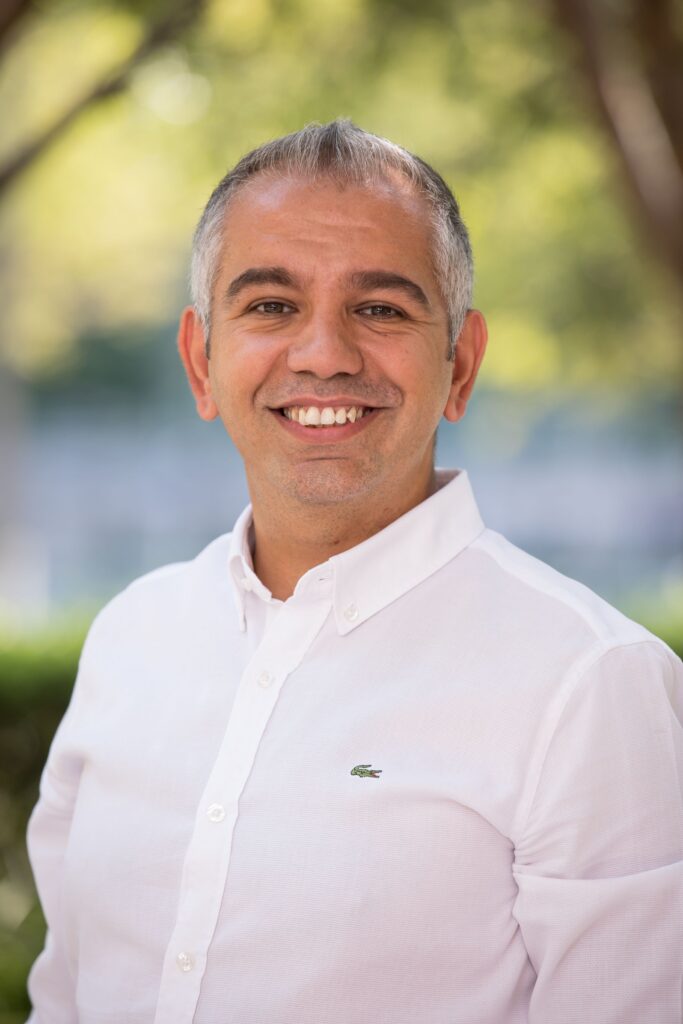
Associate Professor of Neurology
Global Brain Health Institute
Izmir Medicana International Hospital
Izmir, Türkiye
Research Interests
My main research interests lie at the intersection of dementia, neuropsychiatric symptoms, caregiver education, social cognition, and arts-based interventions.
As a clinician, I have always been particularly interested in what happens beyond memory loss. Agitation, apathy, delusions, disinhibition, loss of empathy, changes in personality and communication can profoundly affect not only people living with dementia but also their families and caregivers. I am interested in how we can translate our growing scientific understanding of these symptoms into practical tools that make everyday life easier for families.
A major focus of my work is therefore caregiver education and non-pharmacological interventions, particularly approaches that move beyond conventional written information.
My background in theatre has led me to explore drama, storytelling, role-play and performance as tools for dementia education. I am interested in whether seeing a difficult caregiving situation enacted, rather than simply reading about it, can improve understanding, empathy, self-efficacy and the ability to respond to neuropsychiatric symptoms.
More broadly, I am interested in how arts and neuroscience can inform one another, and how creative methods can help bridge the persistent gap between what we know scientifically about dementia and what people living with dementia and their families actually experience in everyday life.
Tell us about a project you are working on now, which is top of your to-do list.
One of the projects closest to my heart is NAVIGATE, a drama-based caregiver education programme developed to improve understanding and management of neuropsychiatric symptoms in dementia.
The idea came from a very simple observation from clinical practice: we often give caregivers excellent information, but information alone does not necessarily prepare someone for the moment when a person with dementia becomes agitated, repeatedly asks to go home, develops a delusion, refuses care, or behaves in a way the family does not understand.
So we asked a different question: what if, instead of describing these situations, we showed them?
Working with professional actors and dementia experts, we transformed common caregiving challenges into short dramatized scenarios. We then compared this approach with conventional written educational material. The project eventually involved 357 caregivers, far beyond our initial recruitment target, and has generated exciting findings on caregiver knowledge and understanding.
What excites me now is taking the next step: adapting and testing this approach across different languages, cultures and healthcare systems through international collaborations.
Ultimately, I would like to build a scientifically rigorous but accessible model in which theatre becomes not entertainment added to dementia education, but an evidence-based educational intervention in its own right.
Why I joined INTERDEM?
I joined INTERDEM because I see dementia research as something that must ultimately improve everyday life.
What attracted me to the network is its strong emphasis on psychosocial dementia research and its multidisciplinary and international community. I am particularly interested in connecting with researchers working on caregiver support, neuropsychiatric symptoms, social cognition, communication, education, non-pharmacological interventions and arts-based approaches.
But I am joining not only to contribute. I also want to learn.
I hope to learn from the experience of INTERDEM colleagues, understand different approaches across countries and disciplines, and develop collaborations that allow us to test creative interventions across cultures.
I believe some of the most interesting ideas emerge when people from different disciplines look at the same problem from completely different angles. I hope INTERDEM will be a place where I can learn, contribute, collaborate, and occasionally bring a little theatre into neuroscience.
What would it surprise people to know about you?
Probably that neurology was not the only stage I grew up on.
I have been involved in theatre for more than 25 years as an actor and director and have performed in hundreds of performances. For a long time, medicine and theatre seemed like two completely separate parts of my life: during the day I examined brains; in the evening I went on stage and tried to understand people.
Eventually, I realised that perhaps they were never that different.
Both require curiosity about human behaviour. Both ask us to observe carefully, listen, interpret emotion and try to understand another person’s perspective.
Today, theatre is no longer simply something I do outside medicine. It has become part of how I think about neuroscience, dementia, caregiving and communication.
And after all these years, I still genuinely cannot decide whether I am a neurologist who does theatre or an actor who somehow became a neurologist.
Connect with me
Hasan Armağan Uysal, MD
Associate Professor of Neurology
Global Brain Health Institute
Izmir Medicana International Hospital
Izmir, Türkiye
Email: armagan.uysal@gbhi.org