
New INTERDEM member: Cláudia Lima
About Me
I am an Assistant Researcher at ID+, Faculty of Fine Arts, University of Porto, and a design educator. My background spans communication design, digital media and design research, with a PhD in Digital Media. My work focuses on how participatory design can contribute to person-centred, non-pharmacological and psychosocial approaches to dementia care. I have involved undergraduate design students in research with people living with dementia and care professionals, connecting design education with real care contexts. I was drawn to dementia research by the potential of culturally and biographically meaningful artefacts to support communication, participation and wellbeing.
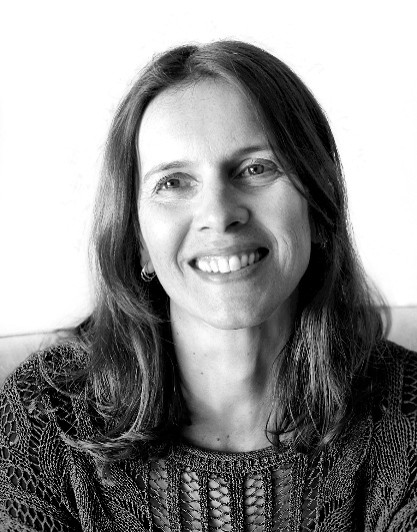
Assistant Researcher
University of Porto, ID+ Research Institute for Design, Media and Culture, Faculty of Fine Arts
Research Interests
My research interests lie at the intersection of design, dementia care, culture and communication. I am particularly interested in how design-led, participatory and non-pharmacological approaches can support communication, personal expression, social interaction and wellbeing among people living with dementia.
My work focuses on culturally and biographically meaningful artefacts and activities for cognitive, sensory and psychosocial stimulation. I examine how material culture, everyday objects, sensory experience, personal histories and cultural memory can inform person-centred design processes and strengthen continuity of identity.
Methodologically, I work with participatory design, sensory and visual ethnography, participant observation, co-design, cultural probes and generational objects. I am particularly interested in adapting research methods to the diverse communicative, sensory and cognitive abilities of people living with dementia across different stages, including through beyond-verbal forms of participation. My work has given particular attention to people living with moderate to advanced dementia, recognising gestures, embodied responses, material choices and patterns of interaction as meaningful contributions to research and design.
I am also interested in dementia education and training, particularly in developing ethical, interdisciplinary pedagogical models that prepare design students and other non-clinical professionals to work with people living with dementia, informal carers, healthcare professionals and care institutions.
Tell us about a project you are working on now, which is top of your to-do list
I am currently coordinating REMIND: Design for People with Dementia, a design-led research and pedagogical project developed with Alzheimer Portugal Association and Santa Casa da Misericórdia de Vila Nova de Gaia. It brings together people living with dementia, care professionals, informal carers, design researchers and undergraduate students to explore how participatory design and culturally, contextually and biographically meaningful artefacts can support communication, cognitive and sensory stimulation, and social interaction across different stages of dementia. Several artefacts are in continued use in care settings, and the project received COFAC’s 2025 Award for Best Innovative Pedagogical Practice.
My current priorities are to consolidate evidence from these institutional contexts, strengthen the project’s participatory methodology and develop interdisciplinary collaborations. One strand examines generational objects and cultural probes as complementary mediators: generational objects provide accessible entry points into recognition, conversation and biographical exchange, while cultural probes encourage reflection on identity, place, values and significant experiences.
Building on this work, I am leading a funding application, currently under evaluation, for a 24-month study entitled Communication and Participation in Dementia: Needs Assessment and Mediation in Institutional Contexts. The proposed study would investigate communicational and relational needs across four residential care homes using mixed methods, ethnography, observation and cultural probes. My longer-term aim is to strengthen Design and Dementia as an interdisciplinary field and develop transferable, ethically grounded methods that support communication, participation and person-centred care.
Why I joined INTERDEM?
I joined INTERDEM to contribute a design research perspective to psychosocial and non-pharmacological approaches to dementia care, while learning from and collaborating with researchers and practitioners across disciplines.
I am particularly interested in how participatory design methods and mediating artefacts, including cultural probes and generational objects, can facilitate communication, support personal expression and foster meaningful social interaction among people living with dementia at different stages. These approaches are especially valuable when participation cannot rely primarily on verbal communication, as they recognise gestures, embodied responses, sensory engagement, material choices and patterns of interaction as meaningful contributions to research and design.
INTERDEM provides an important interdisciplinary context in which to strengthen Design and Dementia research, exchange methodological knowledge and develop collaborative studies relevant to research and care practice. I am therefore particularly interested in the Methodology Taskforce, followed by Context, Culture, and Intersectionality and Dementia Education and Training.
What would it surprise people to know about you?
Outside research and teaching, I work in documentary, portrait, and sports photography. I particularly enjoy photographing surfing and artistic roller skating, where movement, concentration and interaction create compelling visual narratives. Photography is also closely connected to my research practice, as it has trained me to observe details, gestures, relationships and everyday environments. Drawing is equally important to me, particularly through the visual journals I keep regularly. For me, drawing and photography are closely connected: both are ways of observing and recording gestures, interactions and everyday details, even though the medium of representation is different. These practices influence how I think about memory, communication and the sensory dimensions of design.
Connect with me:
Email: crlima@fba.up.pt
LinkedIn: https://www.linkedin.com/in/cl%C3%A1udia-lima-44897a24b/
ResearchGate: https://www.researchgate.net/profile/Claudia-Lima-7?ev=hdr_xprf