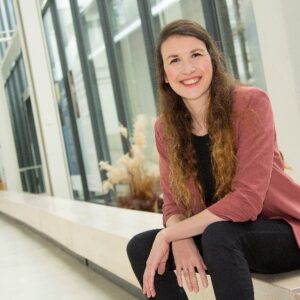
New INTERDEM member: Iris Blotenberg
About Me
I am a postdoctoral researcher at the German Center for Neurodegenerative Diseases (DZNE) in Greifswald, Germany. With a background in psychology, my work focuses on cognitive ageing, dementia, and psychometrics. I am particularly interested in individual differences in cognition and in understanding why cognitive trajectories vary so widely between people. Dementia research brings these questions together in a highly meaningful field, combining scientific complexity with major individual and societal relevance. Ultimately, my work is driven by the question of how people can maintain cognitive functioning, independence, and social participation for as long as possible.
Postdoctoral Researcher
Research Interests
My research focuses on modifiable factors associated with cognitive ageing and the development and progression of dementia, with particular emphasis on the social environment. I am especially interested in how social relationships, psychosocial resources, lifestyle factors, and care conditions relate to cognitive trajectories, everyday functioning, well-being, independence, and participation in later life.
Across my work, I aim to move beyond a one-size-fits-all approach to dementia prevention, care, and support. I am interested in identifying risk profiles and groups that may benefit from tailored interventions, including people at increased risk of dementia, people living with cognitive impairment or dementia, and family caregivers. Methodologically, my work draws on longitudinal data, psychometrics, digital assessment, and health services research.
I also pursue a methodological line of research on the measurement of subtle cognitive change. During a postdoctoral fellowship in Boston, I worked with repeated digital cognitive assessments and computational modelling to better understand individual learning and change trajectories. These approaches may help provide more sensitive and meaningful outcomes for prevention and psychosocial intervention studies, particularly when changes are gradual, heterogeneous, or obscured by practice effects.
Tell us about a project you are working on now, which is top of your to-do list
One project currently at the top of my to-do list is a manuscript under revision on markers of cognitive ageing derived from high-frequency digital cognitive testing. Using repeated multi-day assessments and computational modelling, we examine whether individual learning patterns across several days can provide sensitive indicators of age-related cognitive change.
The project explores whether repeated assessments can capture dynamic aspects of cognitive functioning that are missed by conventional single-session testing. This is particularly relevant for dementia prevention and psychosocial intervention research, where meaningful changes may be subtle and easily obscured by measurement noise or practice effects.
In the longer term, I hope to connect this methodological work more closely with my research on modifiable risk factors, social relationships, and participation-oriented interventions. My goal is to contribute to research that not only identifies who may be at risk, but also measures change accurately enough to evaluate interventions and forms of support that matter in people’s everyday lives.
Why I joined INTERDEM?
I joined INTERDEM because it brings together researchers across countries and disciplines who share a commitment to advancing person-centred and psychosocial dementia research. I particularly value the network’s focus on prevention, social health, and the development and implementation of interventions that can improve the everyday lives of people living with dementia and their families. Having been a member of the INTERDEM Academy since 2023, I am now keen to become more actively involved in the wider network. I hope to contribute my expertise in modifiable risk factors for cognitive aging and dementia, longitudinal methods, and digital assessment, while developing collaborations in the areas of prevention, social health, and participation-oriented interventions.
What would it surprise people to know about you?
People might be surprised to know that I started my academic career in cognitive psychology and psychometrics, studying attention and intelligence test performance, before moving into dementia and ageing research. I still very much enjoy methodological questions, especially when they help us measure meaningful changes in people’s lives more accurately. Outside research, I enjoy yoga, hiking, good coffee, and watching my young daughter discover the world with a sense of wonder.
Connect with me:
iris.blotenberg@dzne.de