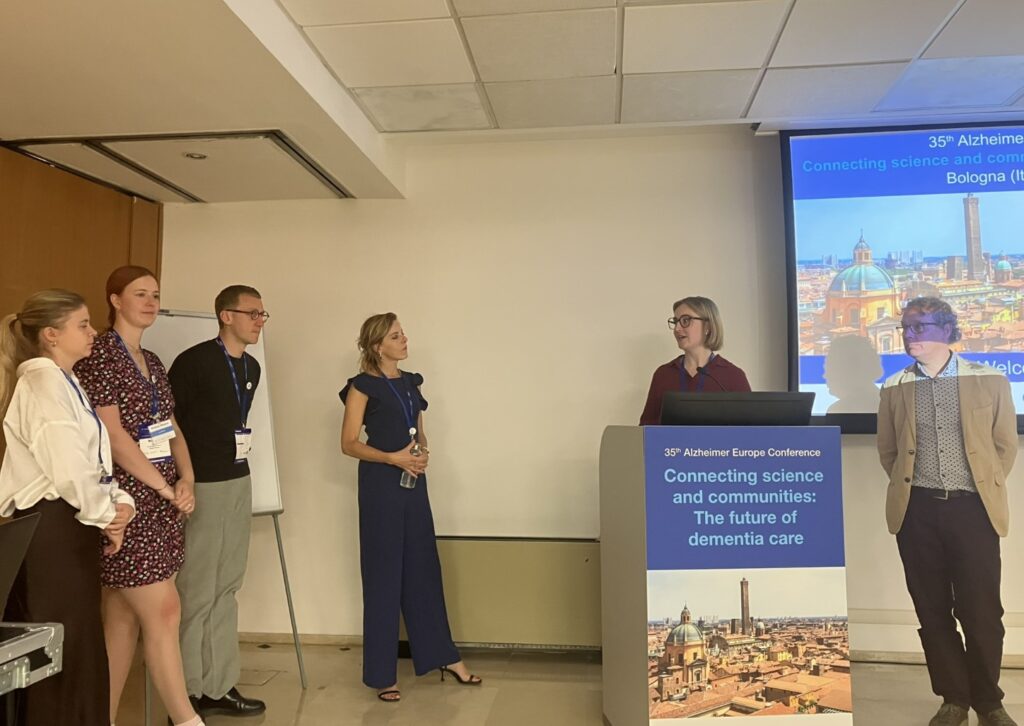
INTERDEM Academy session at Alzheimer Europe: Impactful communication facilitating collaboration: Lessons-learned across career stages
‘Effective’ communication is crucial in inter-disciplinary and -sectoral settings for advancing dementia research and addressing complex societal challenges. Moreover, interpersonal communication is a key skill to advance your career as an early- and mid-career researcher. However, the path to establish and maintain partnerships is not always straightforward. This year’s session at the Alzheimer Europe conference in Bologna, organized by INTERDEM Academy, focused on adapting to and learning from both successes and failures in communication and collaboration. By sharing experiences and real-world examples, this session provided some practical guidelines for fostering enduring, impactful partnerships in research and beyond. With this blogpost, we hope to be able to share the insightful lessons learned with our broader audience of INTERDEM and Academy members.
Reaching out for collaborations as an early-career researcher
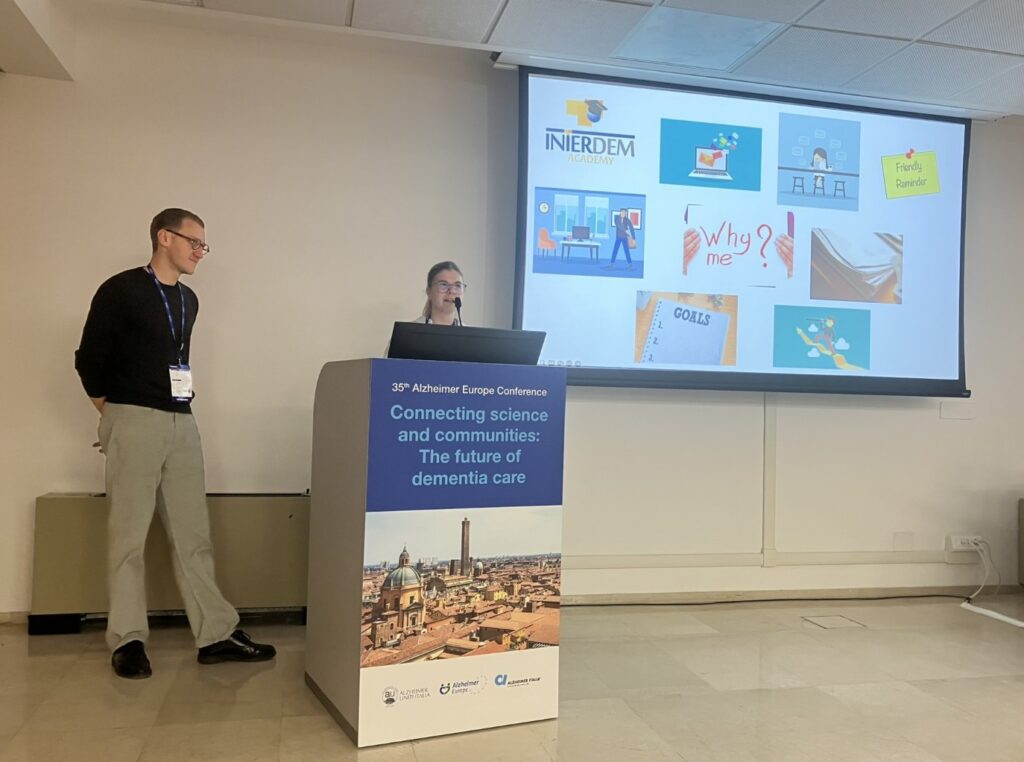
By Ajda Flisar, co-presented with Felix Wittmann
Being an early-career researcher requires us to meet new people, establish connections and create a network of potential collaborators of people working on a similar topic. These interactions are often something new for young researchers and can feel awkward especially when students are insecure about approaching senior researchers. In our session we shared a few tips on how to successfully reach out for establishing connections for collaborations.
- Look for a connection link/person: Try to find a person you know and might introduce you to them. When you are not a stranger, there are higher chances that the person will respond to your email.
- If the person is associated with multiple institutions (e.g. Working for the university and for the hospital) use all emails with their name so that you don’t use their old email or the email which they don’t use regularly.
- If there is no response, send a friendly reminder.
- If possible, opt for walking into the office instead of sending an email. Personal approach as the first contact is always appreciated and people might remember you better.
- Ask your friend to read your email before sending it – you don’t want to afford making grammar mistakes or forgetting to attach your paper in the email.
- Before you meet the person, write down your goal and why should this person be interested in your work.
- If you meet them in person – print your most important papers and leave them with them.
- Do not underestimate networking for collaborations in the future – someone might keep you in the loop despite your current topic or interests not being completely in line with theirs. Nobody knows where your next position is going to take you and what topic you will be researching.
- Remember that first moments in person are often awkward, but this should not discourage you!
Good luck!
Creating and Maintaining connections
By Bryony Waters-Harvey
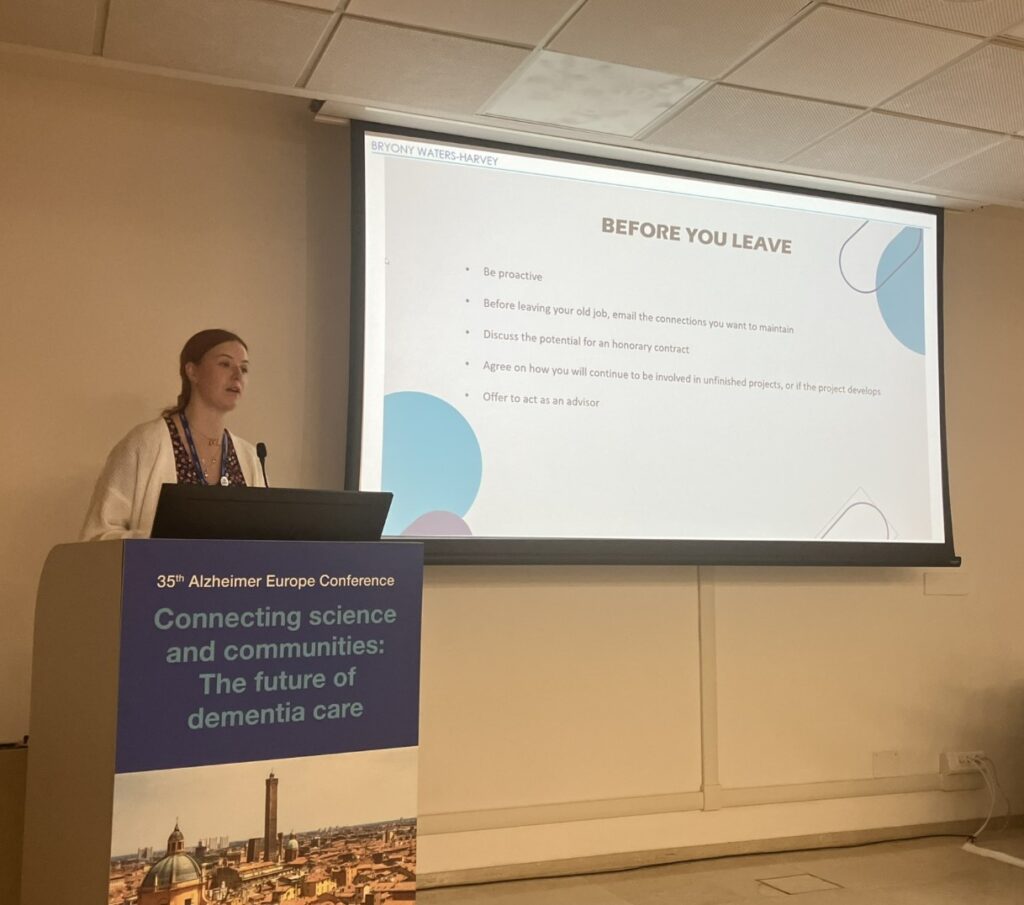
It’s common for early-career researchers to move between universities after a PhD or postdoc. While these moves can be exciting and beneficial, they can also feel disruptive, and there is a risk of losing valued connections. Before you leave, reach out to key collaborators, explore honorary roles to stay involved in unfinished or follow-up projects, and agree on how you will continue to contribute. When you arrive at your new university, create a profile for the university website, and make time for informal chats with your new team; these are often where the best connections start. Ask your new line manager for introductions and use the opportunity to share your existing connections. Maintain wider professional links, such as INTERDEM or other cross-institutional groups, to provide continuity and support during the transition. Finally, ask for help and offer it in return. Building connections takes time, but it is an opportunity to grow your network and strengthen your academic community.
Communication and relationships with industry
By Michael Craven
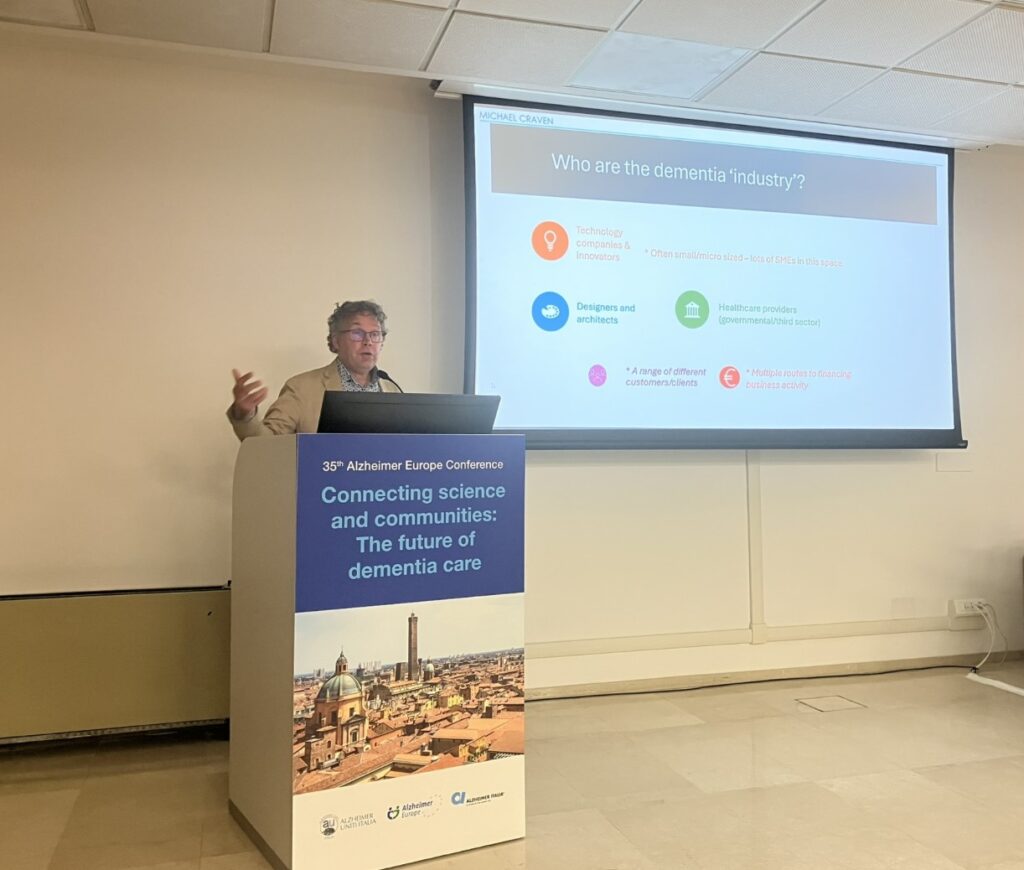
Who are the ‘dementia industry’?
Many research projects in the dementia technology area involve industry partners. These are often small or micro-sized technology companies with an innovation at a particular stage of development but also include designers and architects and healthcare providers, having a range of customers and different routes to financing their business activities.
What does industry want from partnerships with academic?
Discussions often stem from an academic having an interest in their ideas, and companies value an independent view as well as expertise in methodology and support for funding bids. Areas of methodological support may include research study design and health economics. The Empress tool developed by members of INTERDEM and the INTERDEM Academy is one example of a means for industry to self-assess the readiness of their technology, based on methods from implementation science.
Things to bear in mind
Relationships can be short or long term. It may be that academics collaborate only on an early-stage funding proposal, whilst as a technology develops the relationship can deepen and lead to larger projects. However, it is also not unusual for a company to decide that research work is complete such that they will focus primarily on commercial activity. If there is an IP sharing agreement the academic institution may continue to have a stake in a technology, but in cases where the IP remains with the company, at this point a collaborative relationship may end. So, it is worth being prepared for this eventuality.
Collaborating with stakeholders from research, practice and education
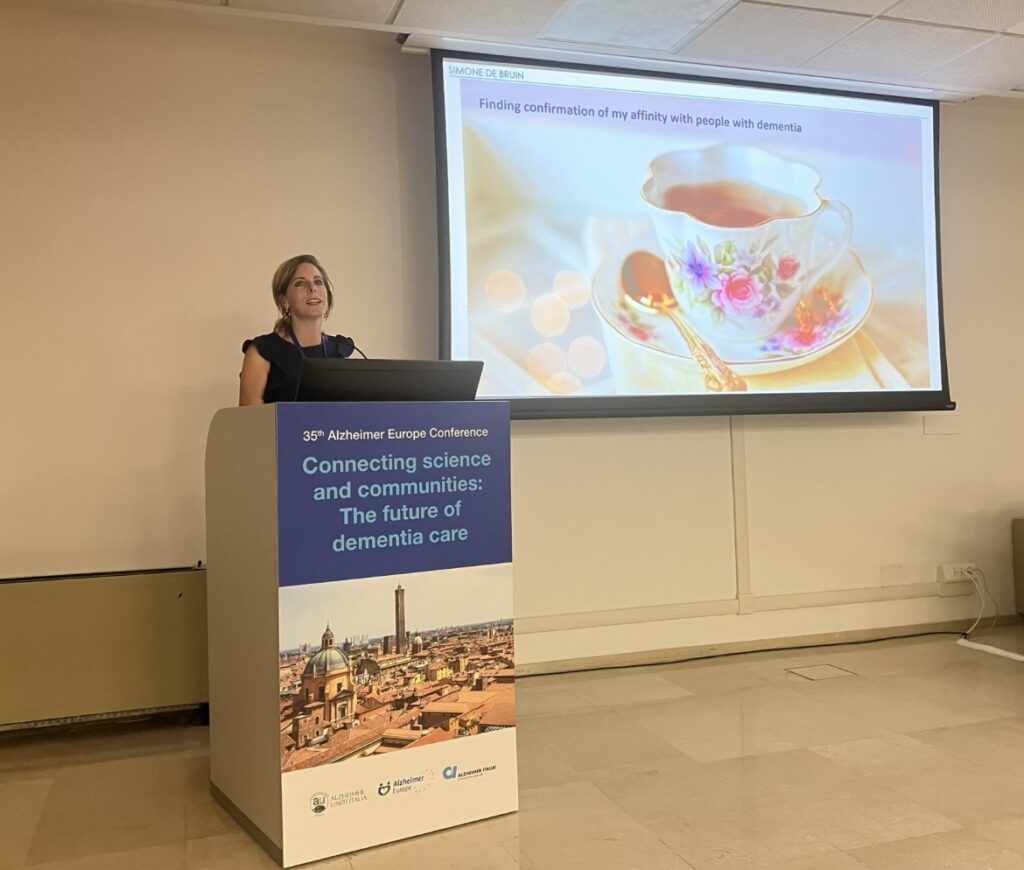
By Simone de Bruin
At universities of applied sciences, where I work, we carry out our research for and by stakeholders from research, practice, and education — such as people with dementia, their informal carers, health and social care professionals, managers, students, teachers, and researchers — with the aim to innovate and improve education and practice.
We connect with these partners in different ways. Examples include dedicated participatory action research projects, advisory boards of our research group (for example, a board of people with lived experience, or a board of professionals from research, practice, and education), and by formulating research projects for students, guiding and teaching them along the way. The main reasons for establishing these collaborations? Because we believe it is fair, valuable, and meaningful!
Lessons that I learned from these collaborations:
- Building sustainable connections takes time. Don’t expect people to join in just because you show up once — trust needs to grow. Take time to connect with people with dementia, their loved ones, and care professionals, even if that means visiting several times just for a friendly chat before starting any research.
- Show genuine interest by learning about their daily lives and work. Meet people where they feel most comfortable — whether that’s at the university or in their own environments, such as care farms, where sharing coffee and daily routines often builds the best understanding.
- Be sensitive to everyone’s needs. People living with dementia may forget appointments or get tired, and professionals work shifts — so flexibility is key.
- And above all: enjoy it! Meaningful collaboration should be rewarding and fun for everyone involved.