35th Alzheimer Europe Conference Insights: Advancing Dementia Prevention through Telemedicine and Mild Behavioral Impairment Research
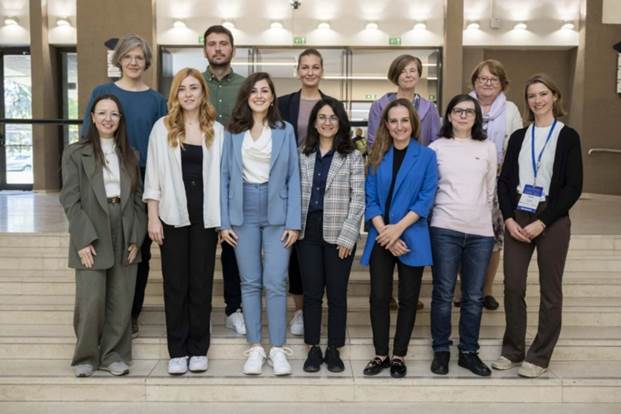
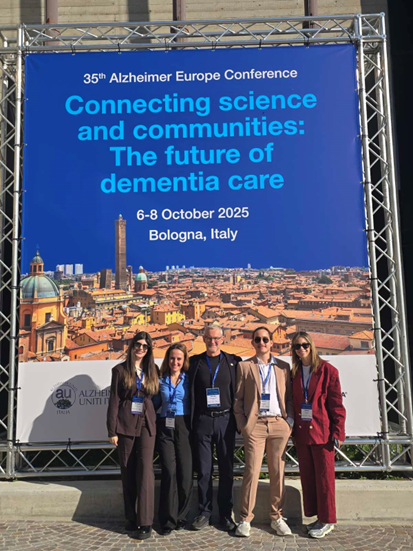
Attending the Alzheimer Europe Conference in Bologna this year was one of the most inspiring and meaningful experiences for me, both scientifically and personally. I had the honour of receiving the “Dementia Researchers of the Future” Award, supported by Frontiers in Dementia, in collaboration with INTERDEM Academy and the Alzheimer Europe Foundation, for my presentation titled: “Integrating Mild Behavioral Impairment into Dementia Prevention Strategies: A Telemedicine-Based Approach Aligned with WHO’s Global Action Plan.”
This research focuses on mild behavioral impairment (MBI) as an early clinical marker of neurodegeneration and how it can be incorporated into dementia prevention strategies. Working as a neurologist and PhD candidate in the “Specialized Clinic of Memory, Dementia, and Parkinson’s disease through the National Telemedicine Network” at Aiginition Hospital, I contribute to the remote cognitive and neuropsychiatric assessment of individuals living in the remote and underserved Aegean islands in Greece. Through the TeleCogNition project (funded by H.F.R.I. P.N. 20570), our multidisciplinary team under the supervision of Professor Sokratis Papageorgiou has designed and implemented a structured telemedicine protocol supporting the early detection, evaluation of behavioral symptoms, and ongoing care in cognitive disorders.
Presenting this work at Alzheimer Europe allowed me to highlight the importance of the early recognition of neuropsychiatric symptoms in older individuals, which could represent the earliest clinical marker of cognitive decline. Incorporating MBI in telemedicine initiatives represents a feasible and scalable approach for national strategies for dementia prevention, even in remote areas.
What made the conference truly valuable were the exchanges with colleagues from across Europe. Conversations on topics such as social cognition, the role of music in brain health, and innovative psychosocial interventions were particularly inspiring and opened possibilities for future collaborations.
I am deeply grateful to INTERDEM for supporting early career researchers, to Frontiers in Dementia for recognizing the value of this work, and to Alzheimer Europe for creating a space where research, practice, and advocacy come together.
Returning to clinical practice and research, I feel even more committed to advancing telemedicine, strengthening collaborative networks, and promoting early detection and prevention in dementia care.
Efthalia Angelopoulou – angelthal@med.uoa.gr